 Marsh Finder
 Know which marsh to hunt before you leave the truck.
Marsh Finder ranks the marsh, flats, ponds and flooded timber within 5 miles of any address in New York State where puddle ducks like to feed and rest. Each spot comes with the reasons it ranks, how to get in, whose land it's on and how far it is from the nearest house.
Black ducks, mallards, teal, wigeon, gadwall and wood ducks
Beta hunters
Sign in, or create a free account. Beta hunters with an invite code get everything free.
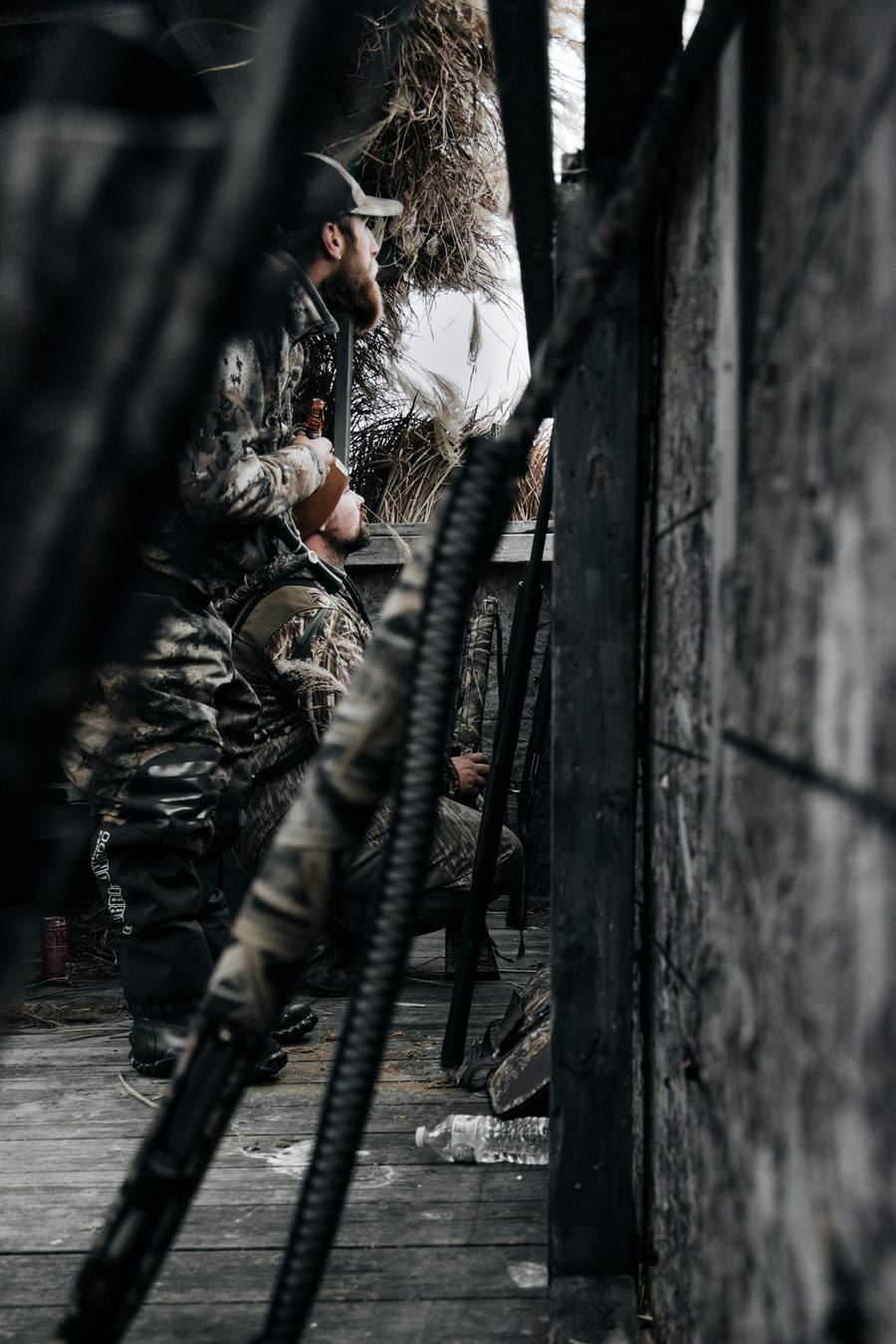
Picking the spot is the hard part
Most of us get a handful of mornings a season. The decoys, the calling and the shooting all come after one decision: where to set up. Across New York that decision is harder than it looks.
It all looks like marsh from the road
From Long Island's salt marsh to the Montezuma pools and Adirondack beaver flows, only some of the water holds puddle ducks: the flats and shallows they feed on, open pockets mixed into the cover, and big water close by to rest on.
Scouting eats the season
Walking unfamiliar marsh to find one good pocket can cost the mornings you were saving to hunt it.
The rules change every few hundred yards
New York keeps you 500 feet from houses. Town marsh, state land and federal refuges each have their own rules and permits, and the lines aren't painted on the water.
Getting in is half the battle
Some marsh is a short walk from a road. Some you can only reach by boat or kayak, and you'd rather learn which at home than at 5 a.m.
The wind decides the day
A pocket that's perfect in a northwest blow can be miserable in a southeaster. Ducks look for shelter, and so do you.
What Marsh Finder shows you
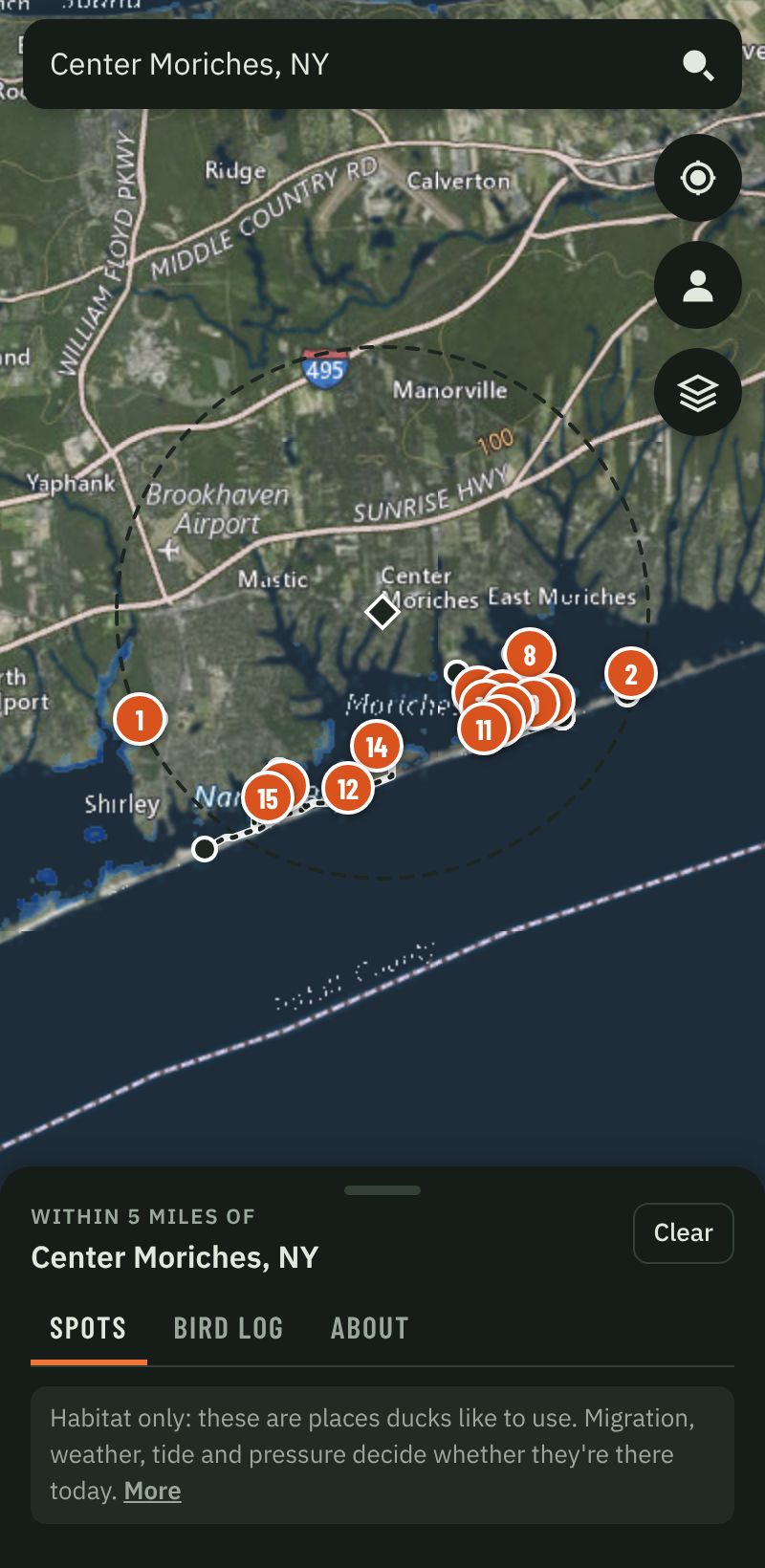
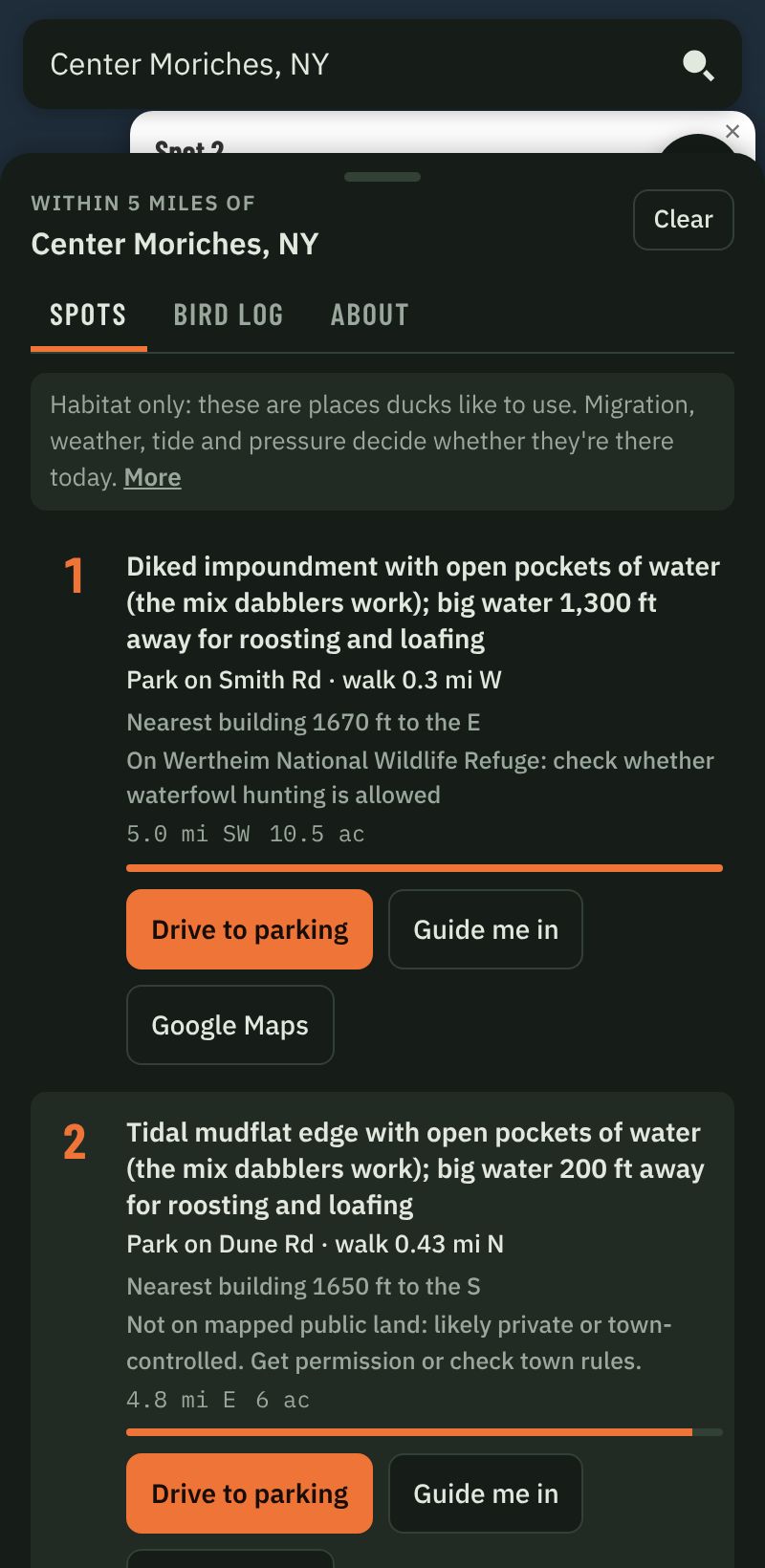
Search an address or tap your location. You get the 15 best spots within 5 miles, ranked, each one explained in plain English.
-
Where they feed and rest
Tidal flats, open pockets in the grass, impoundments and beaver water, scored for food, cover, nearby big water and how far it is from roads and houses.
-
How to get in
The nearest public road and the walk from it, routed around open water, or a plain "boat or kayak" when there's no way in on foot.
-
Whose land, and how close the houses are
The public land each spot sits on, with a reminder to check its hunting rules, plus the distance and direction to the nearest building.
-
Which winds it's sheltered from
Based on the tall cover around each spot, so you can match the spot to the forecast.
-
A bird log that works with no signal
Pin what you see, or that you saw nothing. Spots you looked at at home stay on your phone for the marsh.
What it can't tell you
Marsh Finder reads habitat: where the marsh suits puddle ducks. It can't see whether birds are there today. Migration, weather, tide, ice and hunting pressure decide that, and nothing replaces scouting. Always confirm who owns a spot and whether hunting is allowed there.
How we checked it
We checked the map against about 15,000 places across New York where puddle ducks were reported in fall and winter (2012 to 2025), counting only places where it's legal to hunt. It does best in marsh country, such as Montezuma, the Finger Lakes and the Lake Ontario shore, where it clearly beats simply picking water. Across most of the state it's a solid starting point, not a guarantee. It's weakest on big rivers and open water (the St. Lawrence, the Niagara River, the South Shore bays) and in cities. Use it to decide where to scout, then trust your eyes.
Free through November 1, by invitation
We're opening Marsh Finder to a small group of New York duck hunters for the opening weeks of the 2026-27 season. Use it, log what you see, birds or no birds, and tell us where it's right and where it's wrong.
Not ready to ask? Try the free preview: the habitat map and the top spots near any address.
Or get every spot now
No invite needed. Every ranked spot within 5 miles, anywhere in New York, with how to get in, Guide me in, and offline use. Cancel anytime. Not for you? Full refund within 30 days of your first payment on a season or founders pass (7 days on monthly). Just email us.
Marsh Finder reads habitat; it doesn't find or guarantee birds. Hunt only where it's allowed. Payments are handled by Stripe. Terms